
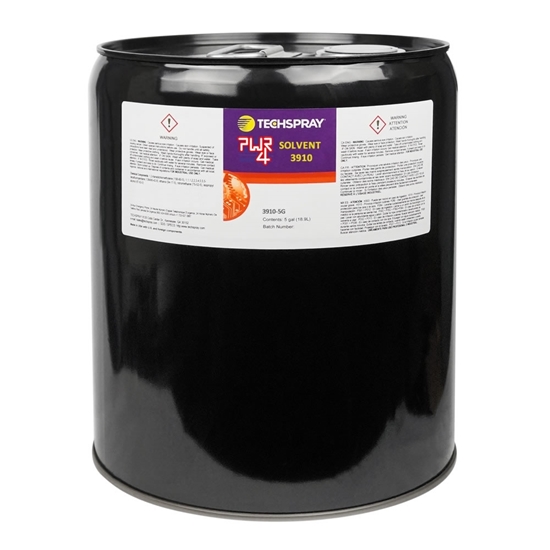
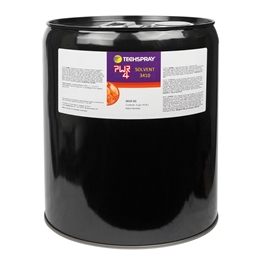
PWR-4 Solvent 3910
MSDS (ANSI)
FAQ's
HOW DO I IDENTIFY AND QUALIFY A 3M NOVEC REPLACEMENT?
For a step-by-step guide to qualifying 3M replacements, see our article (click title) “7 Tips for Qualifying 3M Novec Replacement Vapor Degreaser Solvents”.
WITH A 2025 PHASE-OUT, WHY REPLACE 3M NOVEC NOW?
End-users that want to maintain control of their supply of high precision solvents for their critical cleaning needs should start the process of identifying and qualifying replacements as soon as possible. The alternative would be operating at the whims of global demand on a very restricted supply.
Is 3M discontinuing Novec solvents?
On December 20, 2022, 3M announced their plans to phase-out their Novec PFAS-based product lines by the end of 2025: “3M today announced it plans to exit per- and polyfluoroalkyl substance (PFAS) manufacturing and work to discontinue use of PFAS in its product portfolio by the end of 2025. This portfolio decision is based on careful consideration and a thorough evaluation of the external landscape, including multiple factors such as accelerating regulatory trends focused on reducing or eliminating the presence of PFAS in the environment and changing stakeholder expectations.”
Why is there an shelf life for unopened containers but not opened containers?
Let’s start with what happens when some solvents are out-of-date. Solvents containing alcohol are hydroscopic, so absorb moisture from the air. What starts as 0.2% moisture could drift up to an unacceptable purity level, as it is exposed to ambient air. If sealed, this will happen extremely slowly. That depends on the packaging and sealing method, which we have full control of. Once a container is opened, we no longer have control of it, so it is impossible to give a credible number. If you close it after every use, and have a humidity controlled environment, the same shelf life is probably still applicable. If you leave the container open and you are in the tropics, it will probably pass that unacceptable threshold a lot more quickly. Whether or not 0.5%, 1%, or 10% moisture contamination is acceptable for your operation depends on what you are doing with it. Some aerospace customers absolutely demand their isopropyl alcohol (IPA) is 99.8% pure, so they manage their inventory very carefully. Other customers dilute 99.8% IPA with DI water to make their own 70% IPA for cleaning stencils. There really necessarily a real-world expiration date for that level of criticality.
Articles
3M Novec Replacements: Infographic Guide
On December 20, 2022, 3M announced their plans to phase-out their Novec PFAS-based product lines by the end of 2025. At Techspray, our focus is on high-precision cleaning chemistries, which include chemical replacements for NOVEC and proprietary formulas. Below is an infographic on the availabl...
Read This Post
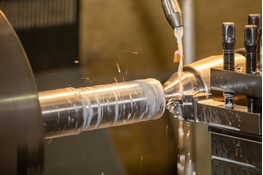
Cleaning Challenges When Machining Medical Implants
The medical industry has exploded in recent decades with new technologies, new materials, and new capabilities, and we have benefited in both quality and duration of life. One of these many advances entails the intersection of medical devices and machined parts. What historically was a l...
Read This Post

EPA: Perchloroethylene (perc, PCE) Poses an “Unreasonable Risk” of Injury to Health for Dry Cleaning
June 2022 – In the report “Perchloroethylene Draft Revised Unreasonable Risk Determination for Public Comment”, the US Environmental Protection Agency (EPA) resolved that the solvent “presents an unreasonable risk for sixty(60) conditions of use” [1], including:
Dom...
Read This Post
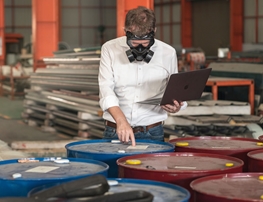
EPA Tightens Restrictions on nPB, TCE, Perc & Methylene Chloride Due to Health Risks from Toxicity
by Dr. Saroj Yadav, Marketing Director and Organic Chemist
n-Propyl Bromide (nPB), Trichloroethylene (TCE), Perchloroethylene (Perc), and Methylene Chloride are four examples of harmful chemicals that are commonly used in aerosol and bulk cleaners in industrial applications. These chemi...
Read This Post

3M Announcement of Novec Phase-Out… What Does It Mean?
On December 20, 2022, 3M announced their plans to phase-out their Novec PFAS-based product lines by the end of 2025:
“3M today announced it plans to exit per- and polyfluoroalkyl substance (PFAS) manufacturing and work to discontinue use of PFAS in its product portfolio by the end of 2025. Th...
Read This Post
Related products
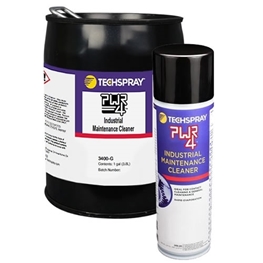 PWR-4 Industrial Maintenance Cleaner
Powerful, nonflammable & cost effective cleaner that is a safer nPB replacement
Techspray - US office
8125 Cobb Center Drive
Kennesaw, GA 30152, United States
1-678-819-1408
Toll-Free: 800-858-4043
Fax: 770-424-4267
Techspray - China office
ITW Specialty Materials (Suzhou) Co., LTD
Suzhou, Jiangsu, CN
008651282060808
Techspray - European office
ITW Contamination Control EMEA
Saffierlaan 5
2132 VZ Hoofddorp
The Netherlands
+31 88 1307 400
info@itw-cc.com



You did not finish submitting your information to request a sample