
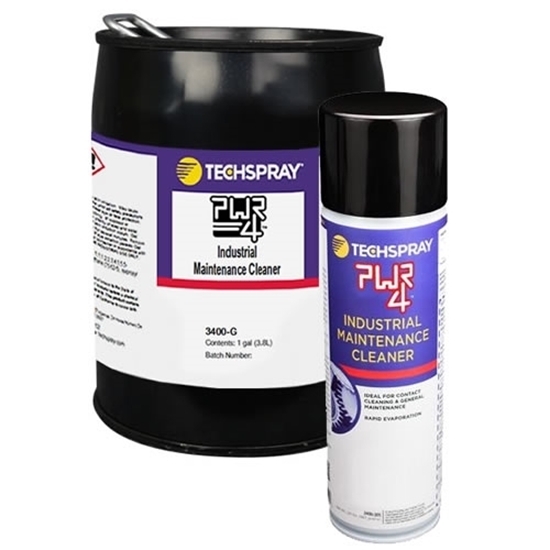
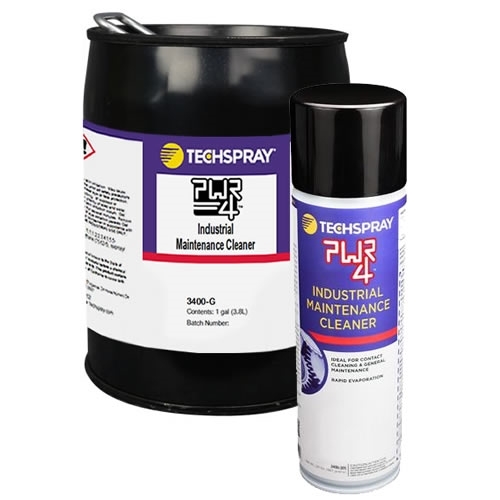
PWR-4 Industrial Maintenance Cleaner
TDS
MSDS (ANSI)
FAQ's
How do you know the safe exposure limit of a degreaser, contact cleaner, or flux remover?
The personal hazard associated with a solvent is often defined using Threshold Limit Value (TLV), which is the recommended average exposure in an 8-hour day, 40 hour work week. The lower the TLV of a particular substance, the less a worker can be exposed to without harmful effects. TLV is stated on the SDS of chemical products, in additional to recommended personal protection equipment (or PPE). The threshold limit value of a solvent is generally set by the American Conference of Governmental Industrial Hygienists (ACGIH). The unit of measure is Parts Per Million (PPM).
How do you use an aerosol cleaner?
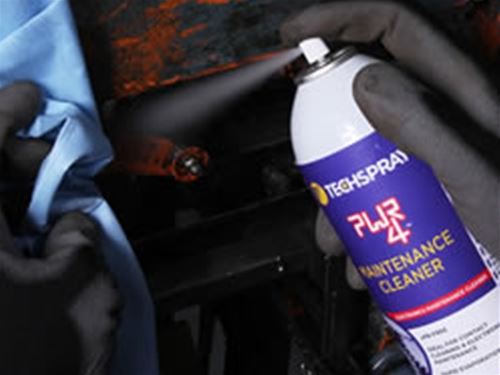
Hold object to be cleaned in vertical position. Pull trigger gently to control solvent flow rate. Spray from top to bottom, allowing the liquid to flush away contaminants.
Are PWR-4 cleaners good replacements for n-propyl bromide (nPB)?
Yes, PWR-4 high performance solvent cleaners are nonflammable, powerful cleaners like nPB, safer than nPB, and are also economically priced.
How do I figure out the shelf life of a product?
The shelf life of a product can be found on either the technical data sheet (TDS), available on the product page or by looking on the certificate on conformance (COC). The COC can be downloaded by going to https://www.techsprayeu.com/coc. Once you have the shelf life, you will need to add it to the manufacture date for a use-by date. The manufacture date can be identified by the batch number. The batch code used on most of our products are manufacture dates in the Julian Date format. The format is YYDDD, where YY = year, DDD = day. For example, 19200 translates to the 200th day of 2019, or July 19, 2019. This webpage explains and provides charts to help interpret our batch numbers: https://www.techsprayeu.com/batch-codes.
Are there degreasers that are more toxic than others?
N-Propyl Bromide (nPB), Trichloroethylene (TCE) and Perchloroethylene (Perc) are highly toxic chemicals commonly used in degreasers to provide cleaning performance in a nonflammable formula. There are documented court cases where workers suffered major health effects when exposed to high levels of these chemicals. Workers reported headaches, dizziness, and even loss of full body control. There are also possible links to reproductive problems and cancer. All of this has caused maintenance facilities to reconsider their solvent choices, especially with manual cleaning when exposure tends to be higher.
Should I worry about plastic packaging and components and rubber seals when degreasing?
Rigid plastics like ABS, polycarbonate (trade name Lexan), and acrylic materials like Plexiglass can be very sensitive to harsh solvents like toluene, xylene, and acetone. Alcohol and hydrocarbon based solvents tend to be better on sensitive plastics. Rubber, silicone or other seals or gaskets made of elastomeric (soft) materials can have a tendency to swell or shrink with exposure to harsh solvents. After the solvent flashes off, they may spring back to their original dimensions, or be permanently changed, impacting the effectiveness of the seal. Polyester or Teflon based gasketing materials are less prone to this type of damage from harsh solvents.
Articles

Vapor Degreasing Fluid Stability
Trans-1,2-Dichloroethylene/HFE Blends vs. Legacy nPB/TCE Chemistry
Executive White Paper
Executive Summary
Modern stabilized trans-1,2-dichloroethylene (t-DCE)/HFE blend vapor degreasing fluids represent a fundamentally different stability category from legacy nPB, TCE, perchloroethylene, and met...
Read This Post
Finding a Replacement for TCE Degreasers
On December 17, 2024, the U.S. Environmental Protection Agency (EPA) finalized a rule banning all uses of trichloroethylene (TCE) under the Toxic Substances Control Act (TSCA), citing detrimental health and environmental risks. The rule bans most uses of TCE within one year, and has left many search...
Read This Post

Understanding the EPA's TCE Ban Under the Toxic Substances Control Act (TSCA)
For decades, Trichloroethylene (TCE) has been widely used in industrial and commercial applications for degreasing and cleaning, especially in industries like manufacturing, aerospace, and automotive. Though, because of its significant health and environmental risks, the U.S. Environmental Protectio...
Read This Post

Techspray at Apex 2025 – Cutting-Edge PCB Cleaning & Repair Solutions at Booth #922
From March 18-20, Techspray will be heading to the IPC APEX EXPO 2025 in Anaheim, CA, to bring the latest innovations in PCB precision cleaning, repair, and temporary solder masking.
As a leading provider of top-performing solutions for the electronics industry, Techspray will showcase products suc...
Read This Post

EPA 1-BP Ruling: Techspray Alternative
In another major development to improve public safety and environmental health, the U.S. Environmental Protection Agency (EPA) has proposed a new rule targeting 1-Bromopropane, also known as 1-BP and nPB, a solvent commonly used in many industries and products, especially vapor and aerosol degreasin...
Read This Post
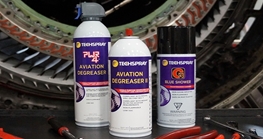
Krytox Removal with Techspray PWR-4 Aviation Degreaser
In the aerospace industry, Krytox grease is a go-to lubricant known for its high performance and durability. However, removing this tough grease can be challenging. We put Techspray's cleaning solutions to the test to evaluate its efficiency in tackling and removing Krytox grease. Our PWR-4 Aviation...
Read This Post
3M Novec Replacements: Infographic Guide
On December 20, 2022, 3M announced their plans to phase-out their Novec PFAS-based product lines by the end of 2025. At Techspray, our focus is on high-precision cleaning chemistries, which include chemical replacements for NOVEC and proprietary formulas. Below is an infographic on the availabl...
Read This Post
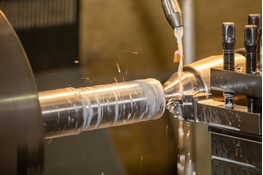
Cleaning Challenges When Machining Medical Implants
The medical industry has exploded in recent decades with new technologies, new materials, and new capabilities, and we have benefited in both quality and duration of life. One of these many advances entails the intersection of medical devices and machined parts. What historically was a l...
Read This Post

EPA: Perchloroethylene (perc, PCE) Poses an “Unreasonable Risk” of Injury to Health for Dry Cleaning
June 2022 – In the report “Perchloroethylene Draft Revised Unreasonable Risk Determination for Public Comment”, the US Environmental Protection Agency (EPA) resolved that the solvent “presents an unreasonable risk for sixty(60) conditions of use” [1], including:
Dom...
Read This Post

7 Tips for Qualifying 3M Novec Replacement Vapor Degreaser Solvents
After markets reopened with a vengeance after the lifting of COVID-19 restrictions, supply chain shortages continue to be an issue. These have led to shortages, long lead times, and extreme price increases. This is challenging enough for commodity products, where one could find new sources from the ...
Read This Post
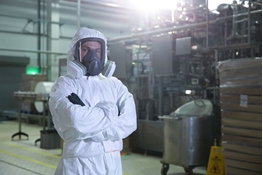
Safety Guide for Proper Handling of 1-Bromopropane (nPB) & Other Toxic Solvents
1-Bromopropane (1-BP or nPB) has been widely used in adhesives, dry-cleaning, steam degreasing, and in electronics and metal cleaning industries. It can be identified as a slightly dense and colorless or faint yellow liquid with a strong odor. Although it was initially proposed as a replacemen...
Read This Post

EPA Tightens Restrictions on nPB, TCE, Perc & Methylene Chloride Due to Health Risks from Toxicity
by Dr. Saroj Yadav, Marketing Director and Organic Chemist
n-Propyl Bromide (nPB), Trichloroethylene (TCE), Perchloroethylene (Perc), and Methylene Chloride are four examples of harmful chemicals that are commonly used in aerosol and bulk cleaners in industrial applications. These chemi...
Read This Post
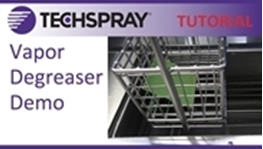
Vapor Degreaser Video Demo & Overview
I'm Pierce Pillon, field engineer with ITW Contamination Control. Welcome to our little video. Today, we'll be going over some of the very basics of the vapor degreasing process, identifying some of the basic units in the degreaser itself. And so let's get started.
VAPOR DEGREASER LOCATIO...
Read This Post

Isopropyl Alcohol (IPA) Replacements for Electronic Assembly and Repair
Techspray offers alternatives to IPA that are as effective if not more so, and in many cases nonflammable with lower environmental impact.
Techspray offers IPA alternatives for:
Electronic printed circuit board (PCB) assembly
Removal of solder paste or adhesive from SMT stencils
Maintenance cl...
Read This Post
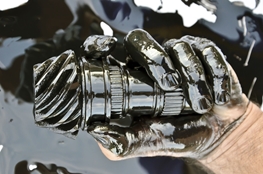
The Expert’s Guide to Degreasers & Maintenance Cleaners
What is a degreaser?
A degreaser is a cleaner designed to remove grease, oils, cutting fluids, corrosion inhibitors, handling soils, finger prints, and other contamination common in assembly, stamping, other types of metal fabrication, refineries, motor repair, airplane hangars, and many other appl...
Read This Post
Guide to Solvent and Water-based Ultrasonic Cleaning
When you are removing tough soils like baked-on flux residues or heavy industrial greases, you can have the strongest solvent cleaner in the world (like those offered by Techspray), but you will still need some kind of agitation. You can brush, wipe and use all manner of elbow grease, but none of th...
Read This Post
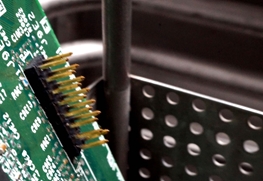
Optimizing the Vapor Degreasing Process
Vapor degreasers use a closed-loop system that works very reliably and efficiently as long as it is set-up correctly. If not, you can experience solvent loss, equipment corrosion, loss of cleaning performance, etc.
By now, your process team has studied the placement area of the unit as well as p...
Read This Post
Key Operational Checks When Setting Up A New Vapor Degreaser
Vapor degreasers use a closed-loop system that works very reliably and efficiently as long as it is set-up correctly. If not, you can experience solvent loss, equipment corrosion, loss of cleaning performance, etc. In our previous article, we discussed the do’s and don’ts of lo...
Read This Post
Finding the Best Location for Your Vapor Degreaser
Vapor degreaser equipment cleans by condensing solvents vapors on the object that it is cleaning. The process is used to clean various materials during manufacturing such as plastic, glass, metal, gold, and ceramic. For more information on the chemistries used for vapor degreasing, check out our&nbs...
Read This Post
Related products
Techspray - US office
8125 Cobb Center Drive
Kennesaw, GA 30152, United States
1-678-819-1408
Toll-Free: 800-858-4043
Fax: 770-424-4267
Techspray - China office
ITW Specialty Materials (Suzhou) Co., LTD
Suzhou, Jiangsu, CN
008651282060808
Techspray - European office
ITW Contamination Control EMEA
Saffierlaan 5
2132 VZ Hoofddorp
The Netherlands
+31 88 1307 400
info@itw-cc.com



You did not finish submitting your information to request a sample