
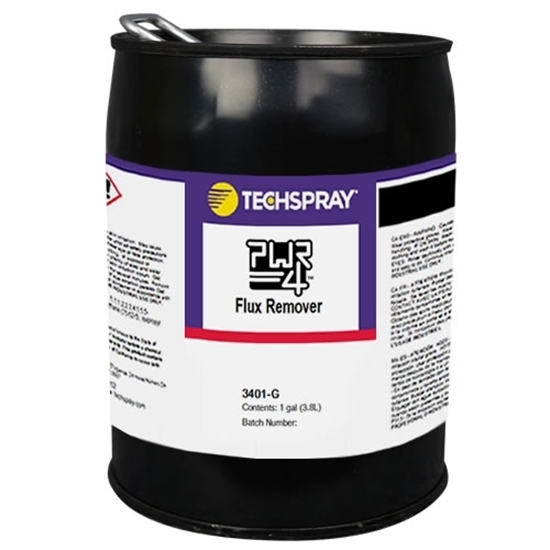
PWR-4 Flux Remover
TDS
MSDS (ANSI)
FAQ's
When should I clean off no-clean flux when soldering?
If it is not fully activated (brought up to solder temperature), you should not leave any ionic residue behind. You might have to clean if...1. Flux is being used so liberally that it all isn’t being heated along with the solder.or2. The non-ionic residue can impede with the function of the devise either short-term or long-term.
How do you know the safe exposure limit of a degreaser, contact cleaner, or flux remover?
The personal hazard associated with a solvent is often defined using Threshold Limit Value (TLV), which is the recommended average exposure in an 8-hour day, 40 hour work week. The lower the TLV of a particular substance, the less a worker can be exposed to without harmful effects. TLV is stated on the SDS of chemical products, in additional to recommended personal protection equipment (or PPE). The threshold limit value of a solvent is generally set by the American Conference of Governmental Industrial Hygienists (ACGIH). The unit of measure is Parts Per Million (PPM).
Are PWR-4 cleaners good replacements for n-propyl bromide (nPB)?
Yes, PWR-4 high performance solvent cleaners are nonflammable, powerful cleaners like nPB, safer than nPB, and are also economically priced.
How do I figure out the shelf life of a product?
The shelf life of a product can be found on either the technical data sheet (TDS), available on the product page or by looking on the certificate on conformance (COC). The COC can be downloaded by going to https://www.techsprayeu.com/coc. Once you have the shelf life, you will need to add it to the manufacture date for a use-by date. The manufacture date can be identified by the batch number. The batch code used on most of our products are manufacture dates in the Julian Date format. The format is YYDDD, where YY = year, DDD = day. For example, 19200 translates to the 200th day of 2019, or July 19, 2019. This webpage explains and provides charts to help interpret our batch numbers: https://www.techsprayeu.com/batch-codes.
Articles

EPA 1-BP Ruling: Techspray Alternative
In another major development to improve public safety and environmental health, the U.S. Environmental Protection Agency (EPA) has proposed a new rule targeting 1-Bromopropane, also known as 1-BP and nPB, a solvent commonly used in many industries and products, especially vapor and aerosol degreasin...
Read This Post
VIDEO: Why & How to Clean PCBAs Before Conformal Coating
Nicole Bass: Hi, I’m Nicole Bass, Product Manager for Techspray conformal coatings…
Jessica Cadena:
and I’m Jessica Cadena, Product Manager for cleaning chemistries. Today we’re going to take you through the importance of cleaning before applying conformal coati...
Read This Post
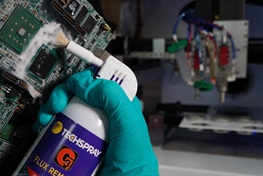
PCBA Cleaning Before Conformal Coating: Increase Reliability & Functional Life
In the electronic industry, the manufacture of printed circuit-board assemblies (PCBAs) has been greatly simplified by the adoption of “no-clean” fluxes during the soldering process. This “no-clean” solder paste intends to eliminate the need for cleaning the circuit boards af...
Read This Post
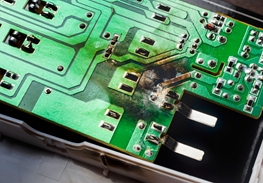
PCBA Cleaning & Conformal Coating Increase Reliability of Critical Systems
Electronic systems in commercial, automotive, and military sectors have increased immensely over the last two decades due to technological advancements. With this increased dependency on electronics, it is more crucial than ever to ensure the reliability of these systems in varying climatic conditio...
Read This Post

7 Tips for Qualifying 3M Novec Replacement Vapor Degreaser Solvents
After markets reopened with a vengeance after the lifting of COVID-19 restrictions, supply chain shortages continue to be an issue. These have led to shortages, long lead times, and extreme price increases. This is challenging enough for commodity products, where one could find new sources from the ...
Read This Post
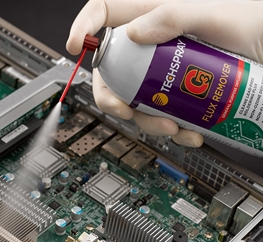
Flux Remover Video How-To Guide
Flux Remover Video How-To Guide
CLEAN WITH OVERALL SPRAY | CLEAN WITH EXTENSION TUBE / STRAW | CLEAN WITH BRUSH ATTACHMENTHi, this is Kevin Pawlowski, application specialist with Techspray. Today, I’m going to take you through the best practices fo...
Read This Post
Vapor Degreaser Video Demo & Overview
I'm Pierce Pillon, field engineer with ITW Contamination Control. Welcome to our little video. Today, we'll be going over some of the very basics of the vapor degreasing process, identifying some of the basic units in the degreaser itself. And so let's get started.
VAPOR DEGREASER LOCATIO...
Read This Post
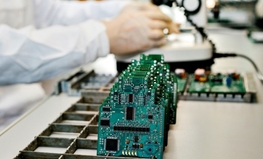
5 Best Practices for Cleaning High Reliability PCBs
Aerosol cleaning introduces a continuous supply of clean, unused solvent throughout the entire bench cleaning process of printed circuit boards (PCBs). Aerosol cleaning prevents the introduction of new contaminants. While there are some obvious pros of aerosol cleaning, questions remain as to whethe...
Read This Post
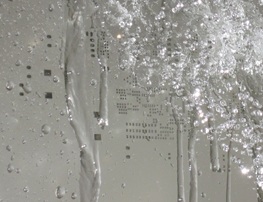
Isopropyl Alcohol (IPA) Replacements for Electronic Assembly and Repair
Techspray offers alternatives to IPA that are as effective if not more so, and in many cases nonflammable with lower environmental impact.
Techspray offers IPA alternatives for:
Electronic printed circuit board (PCB) assembly
Removal of solder paste or adhesive from SMT stencils
Maintenance cl...
Read This Post
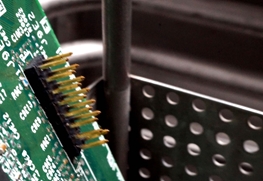
Optimizing the Vapor Degreasing Process
Vapor degreasers use a closed-loop system that works very reliably and efficiently as long as it is set-up correctly. If not, you can experience solvent loss, equipment corrosion, loss of cleaning performance, etc.
By now, your process team has studied the placement area of the unit as well as p...
Read This Post
Key Operational Checks When Setting Up A New Vapor Degreaser
Vapor degreasers use a closed-loop system that works very reliably and efficiently as long as it is set-up correctly. If not, you can experience solvent loss, equipment corrosion, loss of cleaning performance, etc. In our previous article, we discussed the do’s and don’ts of lo...
Read This Post
Finding the Best Location for Your Vapor Degreaser
Vapor degreaser equipment cleans by condensing solvents vapors on the object that it is cleaning. The process is used to clean various materials during manufacturing such as plastic, glass, metal, gold, and ceramic. For more information on the chemistries used for vapor degreasing, check out our&nbs...
Read This Post
Related products
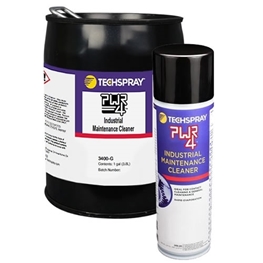 PWR-4 Industrial Maintenance Cleaner
Powerful, nonflammable & cost effective cleaner that is a safer nPB replacement
Techspray - US office
8125 Cobb Center Drive
Kennesaw, GA 30152, United States
1-678-819-1408
Toll-Free: 800-858-4043
Fax: 770-424-4267
Techspray - China office
ITW Specialty Materials (Suzhou) Co., LTD
Suzhou, Jiangsu, CN
008651282060808
Techspray - European office
ITW Contamination Control EMEA
Saffierlaan 5
2132 VZ Hoofddorp
The Netherlands
+31 88 1307 400
info@itw-cc.com



You did not finish submitting your information to request a sample